The positioning strategies tailored to a specific niche They allow for more precise competition: they don't aim to attract the entire market, but rather to solve a specific need for a clearly defined audience. When the offer, content, website, and measurement respond to a specific intent, each visit can have greater commercial value even if the search volume is low.

Positioning a niche isn't about repeating a very specific keyword. It's about demonstrating, page after page, that a brand understands a problem, a purchasing decision, and an industry context better than anyone else.
Table of Contents
- Validate the Niche Before Investing
- Designing an Architecture That Responds to Every Intention
- Prioritize the Right Positioning Levers
- Measure and adjust when there is low search volume
- Frequently Asked Questions
Key Ideas
• A viable niche combines identifiable demand, sufficient margin, conversion capacity, and manageable competition.
• The same topic needs different pages to inform, compare, resolve objections, and convert.
• On small sites, a compact structure without duplicate pages is usually more useful than publishing scattered content.
• When traffic is limited, it is advisable to evaluate qualified impressions, contacts, conversion rate and business opportunities, not just positions.
Validate the Niche Before Investing
The first decision isn't which article to publish. It's deciding whether the niche warrants its own strategy. A market may seem attractive because of its specialization and yet not have enough demand, margin, or recurring revenue to justify the necessary investment.
I would frame this validation as a combination of business and visibility. A query with few searches can be profitable if it generates high-value contracts. Conversely, a keyword with many searches may offer little if it attracts users who only want free information or compare without any intention of buying.
Evaluate the Positionability of the Niche
Before creating content, it's advisable to assess four variables. There are no universal thresholds: they depend on the service's price, the buying cycle, and sales capacity. Even so, this matrix prevents basing the decision solely on the estimated monthly volume.
| Variable | Decision Question | Favorable Signal | Warning Sign |
|---|---|---|---|
| Demand | Are there any searches, business inquiries, or recurring needs? | Multiple long queues and recurring problems | A single, isolated query with no variants |
| Margin | Does a conversion compensate for the acquisition cost? | Average ticket or sufficient lifetime value | One-off sale with very low margin |
| Intention | Can the user move towards a decision? | Search for solutions, suppliers, prices or comparisons | Just look for generic definitions |
| Competence | Is there room for a more specific proposal? | General results or poorly aligned pages | Strong brands with very comprehensive content |
For example, a compliance consultancy for private clinics in Madrid might have a modest volume of traffic. However, searches like “data protection consultancy for clinics in Madrid,” “GDPR audit for dental clinics,” or “data protection officer for clinics” reflect a specific and potentially valuable need. The goal isn't to generate indiscriminate visits, but rather to capture qualified sales leads.
Fair warning: a niche that's too narrow can limit growth. If a company can only target one subspecialty, in a specific location, and for a single type of buyer, there might not be enough inquiries to sustain a broad publishing schedule. In that case, it's better to cautiously expand the thematic, geographic, or service scope rather than produce dozens of pieces with almost identical intent.
Define Buyer Persona and Value Proposition
Market segmentation works when it transforms data into editorial and commercial decisions. A useful buyer persona isn't just a decorative card with age and job title. It must answer practical questions:
• What problem are you trying to solve before you start searching?
• What risk do you want to reduce?
• What technical terms does he use and which ones does he avoid?
• What proof do you need to trust me?
• What barriers hinder hiring?
In a vertical SaaS for law firms, for example, the manager might look for automation, integration with existing tools, support, security, and ease of implementation. A page that only promises "business management software" is ineffective. One that explains workflows, relevant integrations, data migration, and the firm's use cases conveys a more precise value proposition.
This approach also guides the online marketing strategiesSEO, advertising, email, and sales must all use the same language of need. If the ad promises specialization and the landing page talks about generic services, the conversion flow is broken.
Separate Informational and Transactional Intent
One of the most frequent causes of poor performance is trying to address all the search intent with a single URL. Someone searching for "how to choose a billing program for physiotherapists" is still researching. Someone searching for "bidding software for physiotherapy clinic price" is closer to making a purchase.
| Type of Intention | Page Objective | Recommended Format | Main Conversion |
|---|---|---|---|
| Informational | Explain a problem or criterion | Guide, glossary, tutorial, frequently asked questions | Subscription, resource, next reading |
| Comparative | Helping to choose between alternatives | Comparison, checklist, decision matrix | Request for a demo or consultation |
| Transactional | Present a concrete solution | Service, category, or product page | Purchase, quote, call |
| Local Sector | Attract nearby and specialized demand | Landing page by service and area with local testing | Direct contact or appointment |
It's not advisable to force an informational guide to sell immediately. It is better to link it to the sales page once the need is clear. This separation reduces friction, clarifies the structure, and limits keyword cannibalization.
Designing an Architecture That Responds to Every Intention
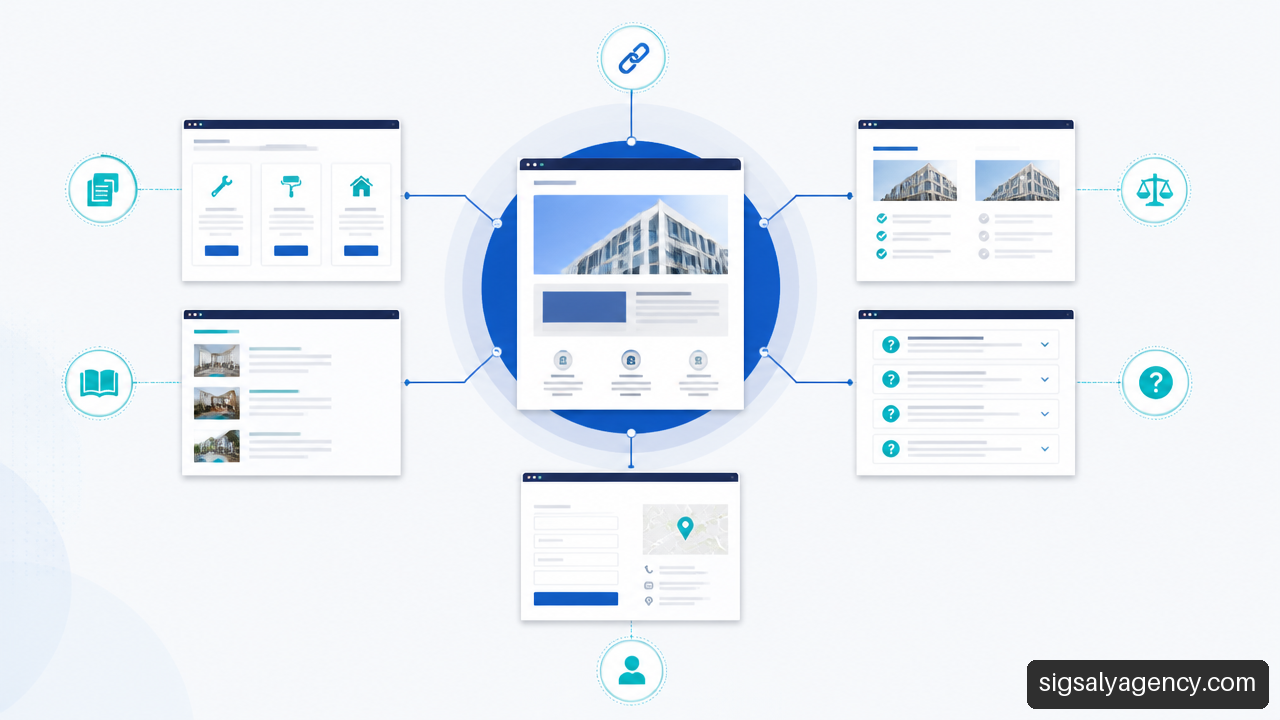
A niche website doesn't need hundreds of URLs to get started, but it does need hierarchy. Search engines and users need to be able to identify what the company offers, who it offers it to, and what topics it specializes in. If all the pages talk about the same thing using slightly different words, relevance becomes fragmented.
NeoAttack's guide to niche SEO It involves keyword research and site structure, along with elements such as sitemap, robots.txt, noindex, and canonical tags. These resources are especially important in small niches, where each URL should have a clear function and not compete with another nearly identical one.
Create a Minimum Thematic Core
For a specialized offer, I would start with a core of six to twelve carefully connected pages. This isn't a Google rule or a guarantee of ranking. It's a practical guideline for covering the business proposition, addressing key questions, and covering micro-intentions without wasting resources.
A reasonable initial structure might include:
- A pillar page for a service or category, focused on the main need.
- Two or three commercial pages for sub-services, customer profiles, or differentiated use cases.
- Two to four support materials that answer questions prior to purchase.
- A comparison, selection guide, or objections page if the purchase process requires it.
- A contact page prepared for the expected action.
Let's consider a store selling ergonomic equipment for small offices. The pillar page might cover "ergonomic chairs for remote work." Supporting pages could address desk height, lumbar support, chairs for tall people, or differences between models. The sales page should focus on categories, reviews, shipping terms, and trust signals. Each piece of content provides context and links to the URL with the highest conversion potential.
Avoid Cannibalization and Low-Value Pages
Search engine cannibalization occurs when two or more pages try to rank for the same intent. It's not always a problem if one URL shares keywords with another; the problem arises when neither clearly indicates which one should answer the main query.
To identify this, it's helpful to review which pages receive impressions from similar queries and compare their objectives. If there are two articles about "software for dental clinics," one could become a selection guide and the other a product page. If both offer a generic explanation, it's worth merging them, redirecting the less useful URL, or redefining their focus.
Semantic over-optimization deserves the same caution. Repeating the main keyword, its variations, and technical terms in every paragraph can make the text less clear. The priority should be to answer precisely. Related terms should appear because they help explain the topic, not because you're trying to cover every possible word combination.
Turning Web Experience into Proof of Specialization
In niches with few direct competitors, user experience can be a clear advantage. A slow, mobile-unreadable, or confusing website when requesting a quote wastes potential demand that might take months to recover.
Kiwosan's approach to optimizing a niche website It includes on-page elements, schema, speed, internal architecture, and indexing control. The practical implication is simple: before expanding content, you must ensure that existing pages are accessible, fast, and understandable for both search engines and users.
A adapted web design It shouldn't be limited to simply reducing screen size. It should make it easier to compare, read specifications, identify advantages, and complete forms on a mobile device. In a B2B company, for example, this could mean showing the use case, the integration, and the next step before requesting personal data.
Prioritize the Right Positioning Levers
Content, links, technical SEO, and website experience all matter. The question is which to address first. Trying to improve everything at once often delays decisions and dilutes budget. Prioritization should be based on the real bottleneck.
Choose Between Subject Matter Authority, Links, and Experience
| Niche Situation | Priority Lever | Because | When to Avoid Starting With Her |
|---|---|---|---|
| Few pages and superficial coverage | Subject matter authority | Basic questions and use cases still need to be answered. | If the relevant URLs are not indexable |
| Competitors with similar content and strong domains | Relevant links and external evidence | It can strengthen credibility against equivalent offers | If the business page still doesn't adequately meet the intended purpose |
| Existing traffic with few conversions | UX and value proposition | The problem comes after the click | If there are almost no prints or visits |
| Site with tracking errors or duplicates | technical seo | Without accessibility, content does not compete properly. | If the audit does not find significant issues |
Backlinks can be useful, especially in competitive niches. However, acquiring links before a solid website amplifies an incomplete experience. Topic authority is usually prioritized when a brand hasn't yet demonstrated sufficient reach. Website experience becomes more important when qualified traffic is present, but users don't find answers, evidence, or a clear next step.
Build Tests That Reduce Risk
In specialized sectors, content must not only inform but also reduce uncertainty. This is especially relevant in healthcare, financial services, legal advice, B2B technology, and activities regulated in Spain. Claims must be accurate, verifiable, and consistent with the reality of the offering.
The most useful signals of trust usually include:
• Transparent explanation of the process, scope and limits of the service.
• Easily verifiable company and contact information.
• Policies, conditions and data protection accessible where applicable.
• Cases, testimonies or results only if they can be presented in a verifiable way.
• Expert authorship or review when the content deals with sensitive issues.
There is no single template for EEA T. In practice, it functions as a discipline of consistency: whoever promises a specialized solution must be able to explain it in detail, demonstrate its limitations, and facilitate an informed decision.
Combining Niche and Local SEO
A business specializing in a specific city shouldn't have to choose between local and industry-specific SEO. It can work on both. The key is to avoid creating dozens of pages per municipality with the same text and only changing the name of the town.
A sports rehabilitation clinic in Valencia can create a homepage for its services, supporting content about injuries or treatments, and a local landing page that includes location, service area, professionals, appointment process, and detailed information about the center. Local differentiation should provide useful information, not simply a geographical copy.
At this point, the marketing A niche business gains consistency when its profile, website, campaigns, and marketing communications all describe the same specialty. Conflicting signals confuse both people and the systems that interpret the business and its services.
Measure and adjust when there is low search volume
A small niche requires more careful data interpretation. Ten clicks might seem insignificant in a week, but they can represent a valuable opportunity if they originate from transactional inquiries and generate two qualified leads. Therefore, simply measuring traffic or average position provides an incomplete picture.
Using a Business-Oriented Dashboard
It's advisable to review metrics by intent groups, not just by URL. Grouping informational, comparative, and commercial queries allows you to identify where opportunities are being lost.
| Metrics | What It Reveals | Interpretation in Small Niches |
|---|---|---|
| Qualified impressions | Visibility to relevant demand | Slow growth can be positive if inquiries are closer to a purchase. |
| CTR | Ability to convert impression into visit | A low CTR may indicate an unclear title or poorly resolved intention. |
| Conversions | Contacts, sales, demos, or appointments | It's the main signal if the objective is commercial. |
| Conversion rate | Traffic quality and page effectiveness | It must be analyzed in context, because small samples vary greatly. |
| New queries | Expansion of thematic coverage | They reveal micro-intentions that can justify new content |
If a landing page receives few visits but converts at 15%, it shouldn't be dismissed based on volume alone. It can be more profitable than an article with hundreds of visits and no action. Conversely, if a guide generates impressions and clicks but doesn't lead to sales pages, it might lack internal linking, a suitable call to action, or an intermediate comparison piece.
Establish an Adjustment Cycle
There's no fixed timeframe for evaluating a niche strategy. It depends on crawl frequency, competition, domain authority, and search volume. In smaller markets, waiting for signals over several weeks is reasonable, but it doesn't mean remaining inactive.
I would use this work cycle:
- Review indexing, coverage, and potential duplicates before publishing more.
- Analyze queries and impressions to detect unmet intent.
- First, improve pages with visibility but low CTR or low conversion.
- Publish a new piece only when it addresses a different question, objection, or use case.
- Reorder internal links to strengthen priority business pages.
- Review the value proposition if qualified traffic is not progressing towards contact.
Market feedback is just as important as metrics. Recurring questions in calls, emails, or forms can point to a micro-intent that's still missing from the website. If several people are asking about implementation timelines, compatibility, or requirements, that information might warrant a prominent section or a dedicated page.
Frequently Asked Questions
What are positioning strategies tailored to a specific niche?
These are SEO, content, website experience, and conversion strategies designed for a very specific audience, problem, and offer. Instead of competing for broad keywords, they aim to address specialized intents and demonstrate a unique value proposition.
How to Choose a Niche with SEO Potential?
Demand, sales intent, profit margin, and competition must be validated. Low search volume doesn't invalidate a niche if each lead has high value. For example, a B2B professional service can be viable with few searches if a single sale offsets the lead generation investment.
What type of keywords work best in a small niche?
Long-tail keywords are often useful because they express specific needs. It's advisable to combine queries related to problem, solution, comparison, price, location, and use case. Not all of them should be targeted with a sales page; it depends on the user's intent.
How much content do you need to publish to start ranking in a niche?
There is no official figure. As a practical guideline, an initial set of six to twelve well-connected pages can cover the service, its sub-services, main questions, and purchasing decisions. The quality of the coverage and the clarity of each URL matter more than the volume of content published.
How to Avoid Keyword Cannibalization?
Each page should have a different primary search objective. If two URLs answer the same question, it's best to merge them or differentiate one as a guide and the other as a service page. Reviewing shared queries in your analytics tool helps identify overlaps.
What Matters More in Small Niches: Content, Links, or Technical SEO?
It depends on the primary obstacle. If the site isn't properly indexed, technical SEO is a priority. If relevant answers are lacking, topic coverage is needed. If solid content already exists but the competition has greater recognition, relevant backlinks and proof of trust may become more important.
Is Local SEO Effective If the Niche Is Highly Specialized?
Yes, especially for in-person services or those with a defined geographic area. The local page should provide accurate information about the location, service, process, and service area. Creating many nearly identical pages per city usually adds little value and can lead to duplication issues.
How to Measure If a Strategy Is Working with Low Traffic?
It measures impressions of qualified inquiries, CTR, contacts, sales, quote requests, and conversion rate. In a narrow niche, a small improvement in high-intent leads can be more relevant than a large increase in informational traffic.
Sources and References
• Kiwosan — How to do SEO to rank a niche website: https://kiwosan.com/seo/seo-para-nichos/
• NeoAttack — SEO for Niches: How to maximize yours: https://neoattack.com/blog/seo-nichos/